
Right off the bat, I want to confess: I desperately wanted this movie to fail. I wanted the great Christopher Nolan to meet his match and buckle under the weight of his own ambition. Not because I wanted to see a bad movie, life is too short to do so, but because I couldn’t imagine a funnier scenario than the best director and best picture winner falling on his face with his immediate follow-up.
Unfortunately for me, but fortunately for the movie-going populace, this man, does not, miss.
Then again, he is working with stacked deck. An elite cast, a God-like cinematographer, a generational composer. They’ve put their faith in Nolan as the captain of this vessel to see them home, no matter what challenges they face. Matt Damon takes on that role on screen as a true movie star does. His performance is convincingly confident, with his ego and hubris leading him to dare defy the Gods and suffer a legendary humbling.
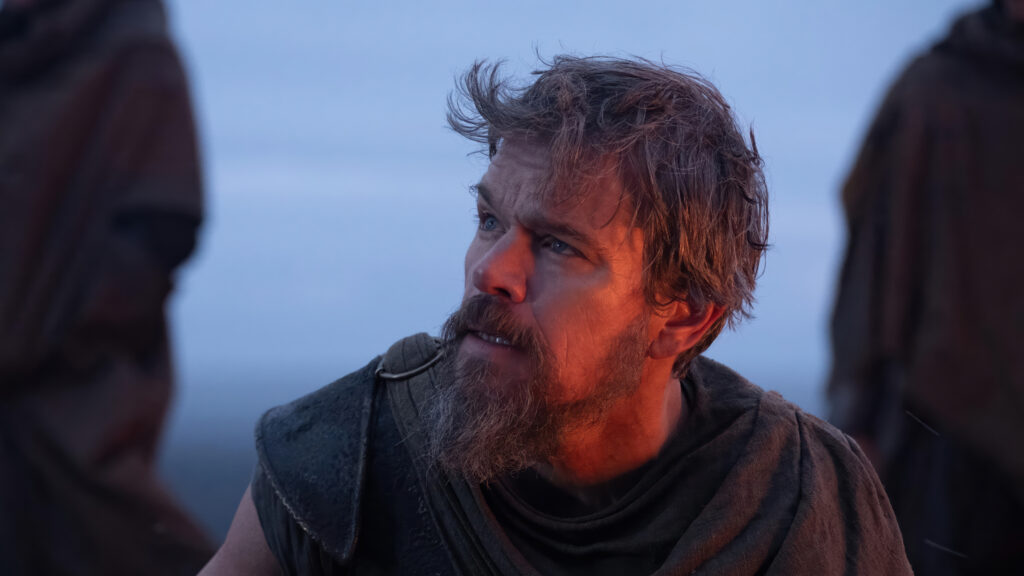
The movie opens in one of the strangest ways it possibly could: Travis Scott banging a staff on a wooden table as he throws out ad libs for his latest track. It’s a dizzying thing to see, setting the stage for a story of hubris, told initially with copious amounts of exposition. The first few scenes of the film are oddly paced, with pointed dialogue, said with a whimper from Tom Holland and a mustache-twirling snarl from Robert Pattinson, interrupted by a grumble by John Leguizamo, and a scold from Anne Hathaway.
At first, it seemed I was getting my wish, and that The Odyssey would amount to no more than a very expensive bit of community theatre. The kind with actors that are far too inexperienced to speak with anything but an American accent. Still, even if the dialogue remained stilted and obvious, once the adventure starts, the awkwardness ends.
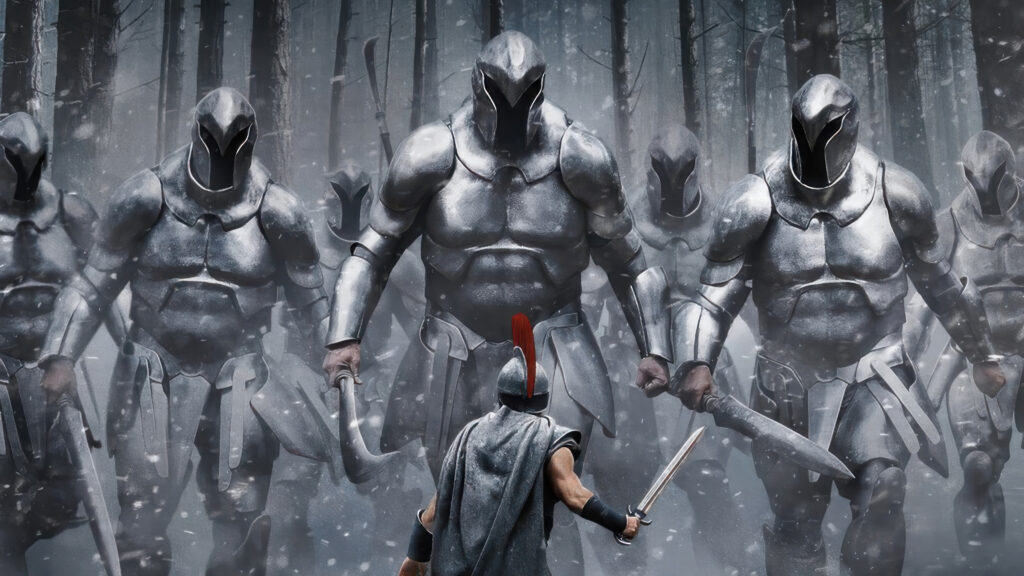
The chilling clash with a cyclops. A hiatus into hell. A stand-off with staggering steel warriors, The Odyssey is at times a hilarious comedy of errors. The sheer number of obstacles facing Odysseus on his journey home is absurd and infinitely captivating. With each rest stop they take, you’ll find yourself leaning forward to learn more about the side quest before you.
Watching the story unfold is thrilling, but especially so for Nolan fans. All the director’s tricks are on display. You have non-linear storytelling, from an unreliable narrator, with an increasingly complicated sense of morality. The Gods are spoken about, but never definitively shown, and the exploits are recounted from the perspective of an aged warrior whose mind is fading. Nolan even flexes some new muscles, delving into high-grade body horror, only adding to the bizarre nature of the events as they unfold. The mystery of the world is palpable, with more questions raised than answers, and plenty left behind for the audience to mull over in the parking lot after the credits roll.
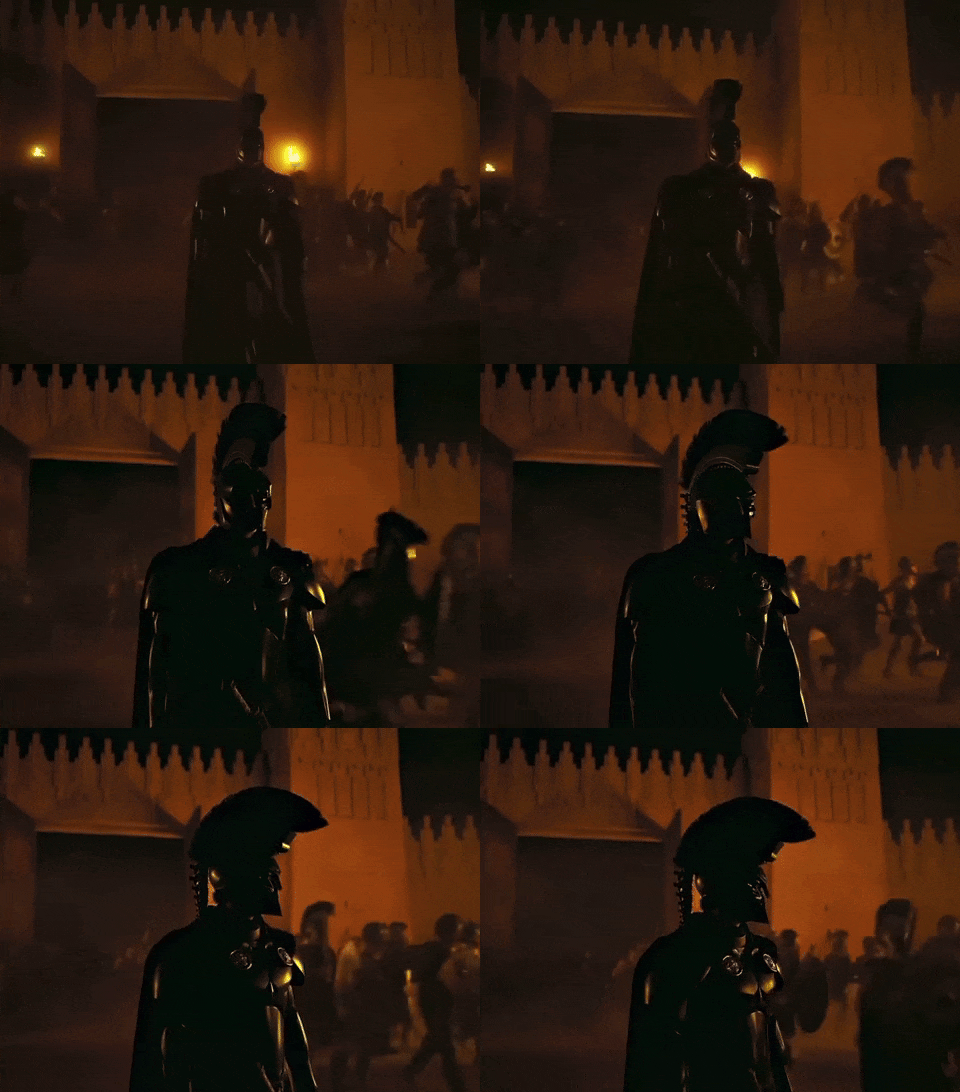
All of this is portrayed with an unprecedented level of pragmatism. Perhaps more than ever, the world of Gods and monsters is tactile, grounded in painstaking detail, establishing just how daunting this story is on its subjects. At the same time, this reverence to reality detracts from the film. The more fantastical elements of the story lose a sense of mysticism. Nolan takes the axe to surrealism, just as he did when he omitted a giant penny and regular sized T-rex from the Batcave decor. On the flip side of that charred coin, Batman lept from an impossible height in Japan, and Agamemnon stalks forth in a Darth Vader fit that goes incredibly hard, and suddenly, I forgive the brutalism.
The film is also crushingly depressing, as Odysseus is forced to reckon with his demons. As a military leader, he’s unparalleled, with his cunning mind and brute strength bringing him victory. It’s only upon reflection that he’s forced to take stock of his methods and the damning outcome. As he did with Oppenheimer, Nolan presents Odysseus as an effective tool that regrets being used for its purpose. As he confronts his identity, Matt Damon portrays a man unable to believe the lies he tells himself in pursuit of a distant truth.
His actions have consequences for the world at large, something the film makes excruciatingly obvious, but they also affect his most intimate relationships. Tom Holland’s Telemachus balances between grief and hope as he awaits his father’s return for 20 years, and Anne Hathaway has to play politics as she wards off aspiring suitors. The worst of which is Robert Pattinson’s Antinous, whose cowardice is apparent despite his efforts to present as proud.
The most compelling scenes are with John Leguizamo, delivering a potential career best as Odysseus’ devoted servant. The present-day vernacular takes some getting used to, but the entire cast does a tremendous job, with Samantha Morton stealing every scene she’s in, no matter who her scene partner is. As good as everyone is, The Odyssey wasn’t quite the emotional catharsis I’d hoped for. It’s a film that delivers on grandiosity but falls short on emotional impact.
For just shy of 3 hours, the 3,000 year old epic The Odyssey was retold in appropriately epic fashion, from the perspective of one of cinema’s finest. It’s a translation that’s tailor-made for the biggest screen you can possibly find, and delivers a cinematic experience unlike any other.
Rating: Big screen watch

